So... all our oil and coal originates from plant and animal matter, right? Living stuff was buried over millennia, compressed and reduced and cooked until all that remains is a sludge of hydrocarbons: long branches of carbon bursting with hydrogen atoms like ripe fruit ready for the fiery picking.
And our industrialized, world-changing society was built on finding these puddles of free energy, just lying there*.
So what if we, or a race like us, rose up in the Cretaceous? The first abundant complex life on earth rose up at the end of the Proterozoic Eon, around 600 million years ago; but the Cretaceous period, where there's massive complex animal life in the form of dinosaurs and other beasties was around 100 million years ago already. Would there be oil to find, to fuel their own industrial explosion?
I had this sudden image of velociraptors learning to herd smaller, dumber dinosaurs; setting up colonies and competing nations; languages, philosophies, dances about the hunt. Their brains grow, they make fences and weapons, they discover surface metals and learn to shape them. A rich and flowering culture emerges, celebrating their prime and central place at the top of the foodchain.

And it all just sticks around until it goes kablooie with the asteroid impact, because there's no oil to fuel a truly industrial velociraptor society. Their theropoda alphabet fades, unfossilized, the writings of Velocishakespeare and his violent (but hilarious!) comedies vanish. The universe murders their society in cold blood, and you can't do anything about it unless you have a space program**.
Of course, this probably didn't happen. We would see fossilized pipes and predator bling at least; and the oil was probably there already anyway, with 500 million years to develop.
But that just begs another question: why are we the first species on Earth to tap into all this stored energy and have a chance of spreading away from our home planet? That's hard to say. Maybe pure predators just have an intelligence cap, or a population cap, and intelligent species are much more likely to develop from animals with general ability (i.e. fingered omnivores). Maybe the exact evolutionary pressures that lead to intelligence are rare, so it's a one in a billion chance. Maybe other lingual species have existed, but didn't develop tools (or leave tools in the fossil record) and were wiped out before they spread. Maybe intelligence is SO rare that its impossible except for uplift***.
Maybe we are inevitable. And maybe, we are special.
Have a Merry Christmas!
><<><<><>><<><><<><<><><>><><>><><>><><><<><><>><><<><><<><>>
"Man becomes man only by his intelligence, but he is man only by his heart."
-Henri Frederic Amiel
* not necessarily true: most of the structure for our world-changing civilization was already in place well before industrialization and the primacy of oil. Metal-based civilizations arose with just wood for smelting, and there was plenty of wood in the Cretaceous. But stick with me for a moment.
** Take a look at some groups that are actually working on this problem, as well as many other potentially earth-shattering or catastrophic possibilities for life as we know it, at The Lifeboat Foundation.
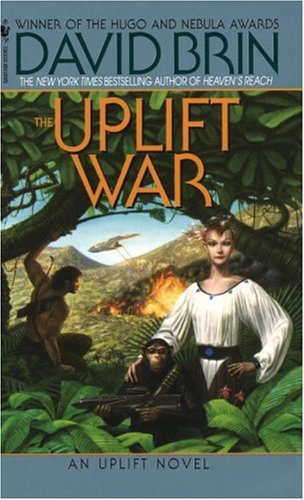
*** also comes in futuristic space opera flavor!
And our industrialized, world-changing society was built on finding these puddles of free energy, just lying there*.
So what if we, or a race like us, rose up in the Cretaceous? The first abundant complex life on earth rose up at the end of the Proterozoic Eon, around 600 million years ago; but the Cretaceous period, where there's massive complex animal life in the form of dinosaurs and other beasties was around 100 million years ago already. Would there be oil to find, to fuel their own industrial explosion?
I had this sudden image of velociraptors learning to herd smaller, dumber dinosaurs; setting up colonies and competing nations; languages, philosophies, dances about the hunt. Their brains grow, they make fences and weapons, they discover surface metals and learn to shape them. A rich and flowering culture emerges, celebrating their prime and central place at the top of the foodchain.

And it all just sticks around until it goes kablooie with the asteroid impact, because there's no oil to fuel a truly industrial velociraptor society. Their theropoda alphabet fades, unfossilized, the writings of Velocishakespeare and his violent (but hilarious!) comedies vanish. The universe murders their society in cold blood, and you can't do anything about it unless you have a space program**.
Of course, this probably didn't happen. We would see fossilized pipes and predator bling at least; and the oil was probably there already anyway, with 500 million years to develop.
But that just begs another question: why are we the first species on Earth to tap into all this stored energy and have a chance of spreading away from our home planet? That's hard to say. Maybe pure predators just have an intelligence cap, or a population cap, and intelligent species are much more likely to develop from animals with general ability (i.e. fingered omnivores). Maybe the exact evolutionary pressures that lead to intelligence are rare, so it's a one in a billion chance. Maybe other lingual species have existed, but didn't develop tools (or leave tools in the fossil record) and were wiped out before they spread. Maybe intelligence is SO rare that its impossible except for uplift***.
Maybe we are inevitable. And maybe, we are special.
Have a Merry Christmas!
><<><<><>><<><><<><<><><>><><>><><>><><><<><><>><><<><><<><>>
"Man becomes man only by his intelligence, but he is man only by his heart."
-Henri Frederic Amiel
* not necessarily true: most of the structure for our world-changing civilization was already in place well before industrialization and the primacy of oil. Metal-based civilizations arose with just wood for smelting, and there was plenty of wood in the Cretaceous. But stick with me for a moment.
** Take a look at some groups that are actually working on this problem, as well as many other potentially earth-shattering or catastrophic possibilities for life as we know it, at The Lifeboat Foundation.
*** also comes in futuristic space opera flavor!